
Alligator Cracking in Asphalt: What It Means and When It Needs Repair
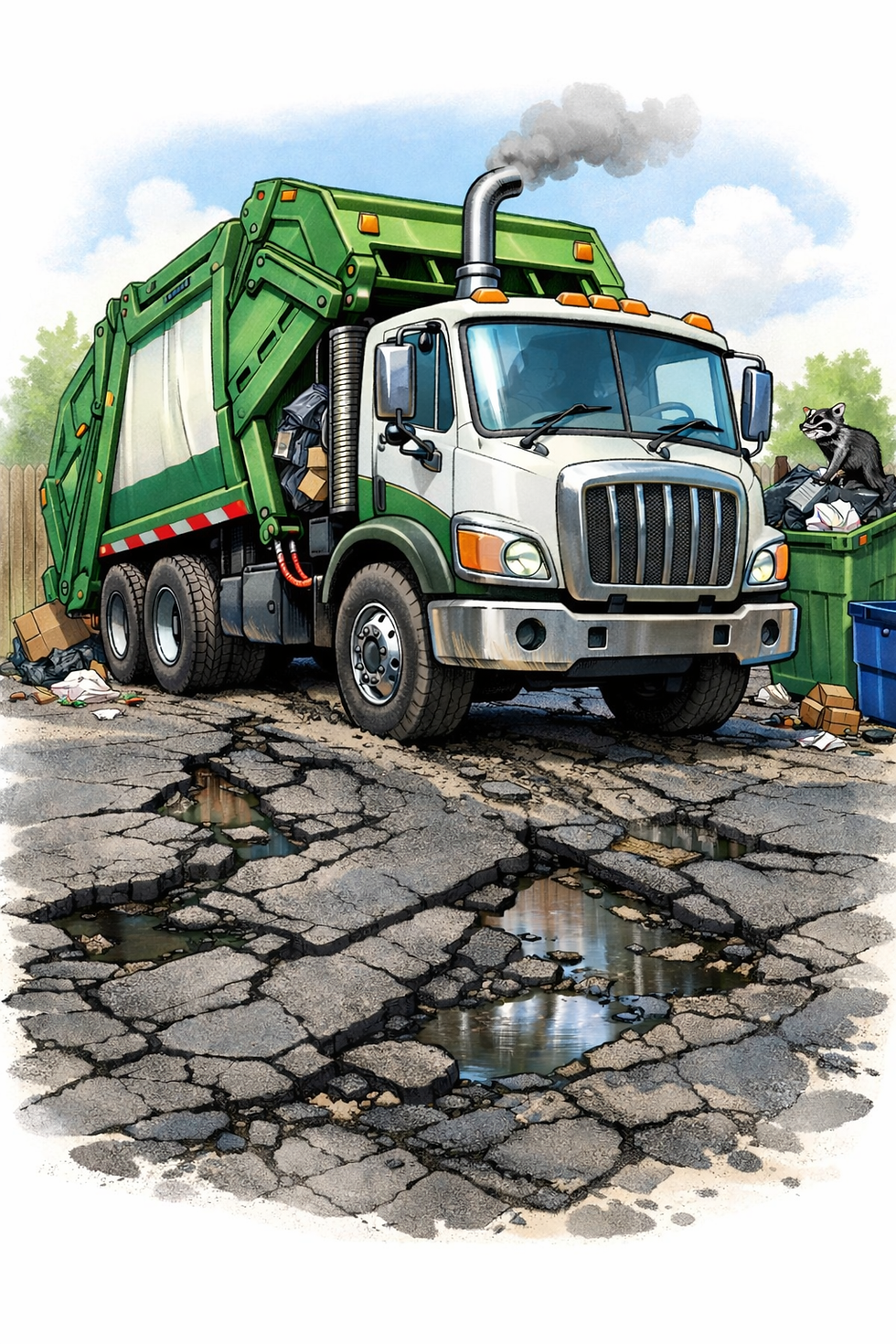
If you've noticed an area of asphalt covered with a network of interconnected cracks resembling the scales on an alligator's back, you're looking at what the asphalt industry commonly calls alligator cracking.
You may also hear it referred to as fatigue cracking, crocodile cracking, or spiderweb cracking.
Regardless of the terminology, alligator cracking deserves attention because it can indicate something very different from an ordinary crack in an asphalt surface.
At Armor Asphalt, one of the questions we hear from property owners is, “Can you just crack seal it?”
In most cases, the answer is no—and there's a good reason why.

What Is Alligator Cracking?
Alligator cracking is a pattern of interconnected cracks that develops within asphalt pavement. In more advanced cases, the pattern creates small, irregular pieces of pavement resembling alligator skin.
Unlike an isolated longitudinal or transverse crack, alligator cracking is generally associated with fatigue or deterioration within the pavement structure.
However, not every alligatored area is at the same stage.
Some areas may show relatively light surface cracking while remaining reasonably stable. Others may have significant movement, broken pavement, rutting, depressions, loose pieces, or areas where water and base material move under traffic.
That distinction matters when deciding what should be done.
What Causes Alligator Cracking?
There isn't one single cause. Often, several factors work together.
Common contributors include:
Repeated heavy traffic loads
Insufficient pavement thickness for the traffic being carried
Weak or poorly compacted base or subgrade
Water infiltration beneath the pavement
Poor drainage
Deterioration from age and oxidation
Repeated freeze-thaw and seasonal movement
Failure to address developing pavement problems before they become structural
Water is particularly troublesome. Once water gets through cracks and reaches the material supporting the asphalt, that support can weaken. Traffic then repeatedly flexes the pavement above the compromised area, accelerating cracking and deterioration.
Can Alligator Cracking Be Prevented?
Not every pavement failure is preventable, but proper maintenance can significantly reduce the conditions that contribute to premature deterioration.
One of the most important measures is addressing ordinary cracks before they become larger pathways for water.
This is where professional crack sealing has real value.
When appropriate cracks are cleaned and filled with a flexible hot-applied crack sealant, the sealant helps reduce water intrusion into the pavement structure while accommodating normal pavement movement.
Routine pavement maintenance may also include:
Correcting drainage problems
Sealing appropriate cracks before they deteriorate
Repairing isolated pavement failures
Applying sealcoating at appropriate intervals
Preventing standing water
Addressing heavily loaded areas before substantial deterioration occurs
The goal isn't simply to make asphalt look better. Good preventive maintenance is about protecting the pavement structure and slowing deterioration.
Should Alligator Cracks Be Crack Sealed?
Generally, no.
This sometimes surprises property owners because alligator cracking obviously contains cracks. It seems logical that filling those cracks would help.
The problem is that crack sealing is designed primarily for individual working cracks—not networks of fractured pavement.
An alligatored area may contain dozens or hundreds of small interconnected cracks. Attempting to fill that network with crack sealant does not restore the pavement's structural integrity.
It can also consume a considerable amount of material while providing little meaningful benefit.
That's why Armor Asphalt does not recommend applying crack sealant throughout alligatored pavement simply to make it appear treated.
We would rather explain what's happening and recommend spending maintenance dollars where they can actually provide value.
Does Every Alligatored Area Need to Be Replaced Immediately?
No—and this is an important distinction.
Seeing alligator cracking does not automatically mean the entire area needs immediate removal.
A lightly alligatored area that remains relatively tight, stable and level may continue functioning for some time. Depending on the pavement's condition, intended use, budget and long-term plans for the property, monitoring the area may sometimes make more sense than immediately replacing it.
Sealcoating may improve appearance and help protect the asphalt surface from oxidation and weathering, but it's important to understand what it cannot do:
Sealcoating does not repair structural failure underneath asphalt.
If the pavement underneath is moving or failing, coating the surface will not stop that movement.
As alligator cracking progresses, the pavement pieces may begin moving independently. Depressions, loose asphalt, potholes and additional water infiltration can follow.
When Does Alligator Cracking Need to Be Repaired?
We become more concerned when we see conditions such as:
Significant pavement movement
Depressions or rutting
Loose or displaced pieces of asphalt
Pothole development
Water collecting in the affected area
Evidence of base failure
Severe cracking in high-traffic areas
Deterioration creating a potential safety or liability concern
At that point, putting additional material over the surface or filling individual cracks generally doesn't address the underlying problem.

Can Alligator Cracking Just Be Patched?
This is where the type of patch matters.
Potholes can be patched.
Once pavement has deteriorated to the point that material has broken away and created a pothole, properly patching that pothole can restore the missing pavement, improve the driving surface and help prevent the pothole from continuing to enlarge.
However, patching a pothole is very different from placing a thin layer of asphalt over an alligatored area.
Sometimes referred to as a skin patch or thin patch, this approach places a relatively thin layer of asphalt over the existing cracked pavement without removing the failed material underneath.
It may make the pavement look better temporarily.
But it does not correct the underlying failure.
Traffic continues to flex the weakened pavement underneath, and those stresses are transferred into the new asphalt placed on top. Eventually, cracking can reflect back through the thin patch, or the patch itself can begin breaking apart.
Worse, water may continue entering the pavement structure while the visible signs of deterioration are temporarily hidden. By the time the thin patch fails, the underlying deterioration may have progressed and the eventual repair can be larger and more expensive.
For that reason, Armor Asphalt does not consider skin patching an appropriate long-term repair for structurally failed, alligatored pavement.

Pothole Patch vs. Skin Patch vs. Full-Depth Repair
There is an important difference between these three approaches.
Pothole patching replaces pavement that has already broken away and can be an appropriate localized repair.
Skin patching covers deteriorated pavement without removing the failed material underneath and generally provides only a temporary improvement over structurally failed alligator cracking.
Full-depth asphalt repair removes the failed asphalt, allows the underlying base to be inspected and repaired when necessary, and replaces the area with properly compacted hot mix asphalt.
When an alligatored area has progressed to structural failure, full-depth repair addresses the problem rather than simply covering it.
What Is the Correct Way to Repair Failed Alligator Cracking in Asphalt?
For a localized failed area, a proper full-depth asphalt repair is generally the appropriate solution.
At Armor Asphalt, that means addressing the failed pavement rather than simply covering it.
1. Saw Cut the Failed Area
The perimeter of the failed pavement is saw cut to establish clean, sound edges for the repair.
2. Remove the Failed Asphalt
The deteriorated pavement is removed so the material underneath can be evaluated.
3. Inspect the Base
This is an extremely important step.
Once the asphalt is removed, the underlying material can be inspected to determine whether the base remains stable or whether deterioration underneath contributed to the pavement failure.
4. Repair the Base as Needed
Soft, unstable or unsuitable material should be removed or corrected and properly compacted before new asphalt is installed.
Simply placing new asphalt over a failed base can allow the same problem to return.
5. Pave Back With Hot Mix Asphalt
The repair area is paved with hot mix asphalt and properly compacted to create a dense, durable repair tied into the surrounding pavement.
This process addresses the visible pavement failure and, when necessary, the underlying cause.
Before & After: Repairing the Problem Instead of Covering It

Notice the difference: The failed alligatored pavement was removed and replaced. Crack sealant was then applied to appropriate cracks in the surrounding serviceable pavement. Asphalt repair and crack sealing work together—but they solve different problems.
Where Crack Sealing Does Make Sense
None of this means crack sealing isn't important. Quite the opposite.
Crack sealing is one of the most valuable preventive pavement maintenance tools available when it's used on the right type of cracks at the right time.
The best opportunity is before widespread fatigue cracking develops.
Individual cracks that allow water into otherwise serviceable pavement are good candidates for crack sealing. A quality flexible sealant helps reduce moisture intrusion into the pavement structure while accommodating normal pavement movement.
In simple terms:
Crack sealing helps protect pavement that is still structurally serviceable. It cannot restore structural strength to pavement that has already fractured into an alligator pattern.
Understanding that difference can prevent property owners from spending money on a treatment that isn't appropriate for the condition.
Repair What Needs Repair—Maintain What Is Still Sound
The presence of alligator cracking doesn't mean an entire parking lot or driveway needs to be torn out.
Potholes can often be individually patched, lightly alligatored areas may sometimes be monitored, and structurally failed areas can be removed and repaired individually.
The key is matching the repair method to the actual pavement condition.
That's why a pavement evaluation should involve more than simply counting cracks.
The type of cracking, severity, pavement movement, drainage, traffic and condition of the surrounding asphalt all help determine the appropriate recommendation.
At Armor Asphalt, our goal isn't to recommend the most expensive option. It's to identify what the pavement is telling us and recommend a practical solution based on its actual condition.
Armor Asphalt provides professional asphalt repair, crack sealing, sealcoating, parking lot striping and paving services throughout Jonesboro and Northeast Arkansas.


Comments